To carve this Monstera leaf garden wall art panel, start by sketching your design onto the 400mm x 600mm polystyrene surface using a permanent marker. Since the panel is 100mm thick, you have plenty of room for deep, high-relief carvings. Use a wire brush of various sizes to remove the bulk of the waste or for finer details and smoothing out use smaller finer wire brushed followed by cutting detail with a snap-off blade type craft knife with the blade externed out to reveal the full length of the blade, follow up with shaping more with 120-grit sandpaper. Avoid lower grits, as they tend to rip the foam beads rather than sand them.
Once the carving is finished, choose Jesmonite AC730 for the coating, as it is a stone-effect material specifically designed to withstand outdoor weathering. Begin by brushing on a thin “mist coat” (about 1-2mm) to capture all the fine details of your carving. While this layer is still wet, press Quadaxial Glass Reinforcement fabric into the surface. This step is critical; without the glass matting, the Jesmonite shell may crack as the foam expands or contracts with the temperature.
After the reinforcement is in place, apply several laminating layers of Jesmonite until the shell is roughly 5mm thick. Let the panel cure for at least 24 hours. To achieve a professional finish, you can use a diluted acid etch to reveal the stone aggregate in the AC730, then finish with a penetrating sealer to prevent algae growth and water damage.
Fixing the panel to an exterior wall. The Recessed “Keyhole” Method. Since your panel is 100mm thick, you have enough depth to create an internal hanging point. On the back of the foam, carve out two small, deep square pockets. Glue a hardwood block or a piece of thick marine plywood into these pockets using a strong, foam-compatible grab adhesive. Once the glue has set, screw a metal keyhole hanger plate onto the wood. You can then put heavy-duty screws into the garden wall and simply “hook” the panel onto them. This keeps the panel flush against the wall and allows you to take it down whenever you like.
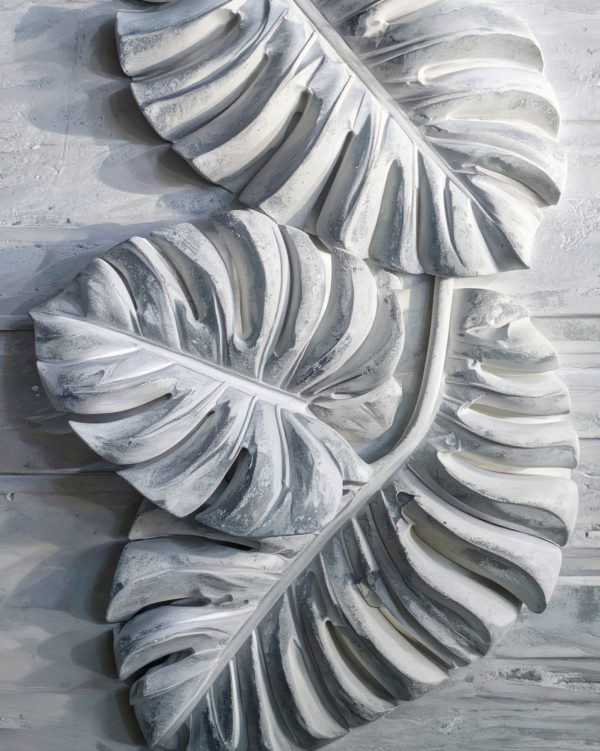
A couple of extra notes about this art panel. I used AC100 Jesmonite on this project and then painted it with masonry paint, I did not use the reinforcement very much as it got in the way of the detailing and some of the detailing was added by carving back the Jesmonite after it had been applied and then sanded back before painting.
For fixing it to a brick wall I hammered a couple of nails into the wall and then forced the panel onto the nails and into the panel, as long it I don’t move it around to often the holes in the back of the panels will not be an issue.