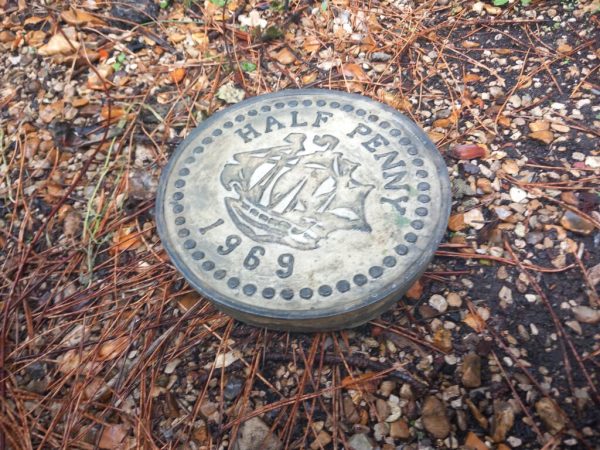
To make a cast polystyrene stepping stone, you dissolve expanded polystyrene (EPS) scrap blocks in acetone to create a pliable dough, then pack it into a mold to cure.
⚠️ Safety Warning: This process involves using 5 litres of acetone, which produces highly flammable and toxic vapours. Work strictly outdoors, wear chemical-resistant gloves, eye protection, and a respirator rated for organic vapours.
Required Materials
- Expanded polystyrene (EPS): White expanded polystyrene, polystyrene packaging works well.
- Acetone: 100% pure acetone, available at hardware stores.
- Mold: A heavy-duty latex, silicone, or polyethylene stepping stone mold.
- Container: A metal bucket or solvent-resistant glass container for mixing.
- Tools: A metal or wooden mixing stick, and a heavy cover (like a large bucket).
Step-by-Step Guide
1. Dissolve the Polystyrene
- Pour the acetone: Add a few inches of pure acetone into your metal bucket.
- Add colour. Add a table spoons worth, small amount of paint to the liquid such as vinyl matt emulsion, artists acrylic paint or add metal powder such as iron to give the final casting a colour.
- Feed the foam: Break the polystyrene blocks into chunks and feed them into the acetone.
- Watch the reaction: The foam will rapidly collapse, melt, and dissolve as the air pockets escape.
- Achieve dough consistency: Continue adding foam until all liquid acetone is absorbed. You will be left with a thick, sticky, pliable blob of plastic dough.
2. Pack the Mold
- Transfer the dough: Lift the sticky polystyrene blob out of the bucket using gloved hands.
- Press and knead: Firmly pack and knead the dough into the bottom of your stepping stone mold. Ensure it fills all the corners, crevices, and textures of the mold.
- Level the top: Smooth out the back of the stone so it will sit flat on the ground later.
3. The Long Curing Process
- Protect from elements: Move the filled mold to a well-ventilated outdoor spot. Cover it loosely with an upside-down plastic bucket to shield it from rain while still allowing airflow.
- Wait for evaporation: The stone hardens as the trapped acetone slowly evaporates out of the plastic.
- Timeframe: This takes a significant amount of time. Expect to wait at least one month for the polystyrene to fully harden back into solid plastic.
4. Demold and Install
- Peel the mold: Once the stone feels completely solid, hard, and no longer smells like solvent, peel the flexible mold away from the plastic.
- Placement: Place your lightweight, weather-resistant plastic stone along your garden pathway.
Extra notes. Before proceeding with the casting it might be an idea to make a few sample blobs of the stuff to get familiar with it and to gain a better understanding of its properties and how long it takes to cure.
The acetone may also damage a latex mould and you may find that the casting does not want to come out of the mould without a bit of force which may also damage the mould.
A cast polystyrene stepping stone is more of a novelty to make than being actually useful and making a concrete one would be easier. A cast polystyrene stepping stone will not be very strong so you will need to make it at least 1″ thick.
The purpose of making a cast polystyrene stepping stone is just for the purpose of experimenting with materials and it is interesting to see what can be achieved with a casting material that acts like a putty before it cures which may take a month or more depending on the weather.